
Commercial Exterior Painting in Camas WA: Weatherproofing Your Business
If you own or manage a property in Camas, WA, you know the rain, river winds, and fast weather shifts can wear down a building’s exterior. This guide explains how professional crews protect commercial facades near downtown Camas and the Columbia River waterfront with prep, primers, and tough finish systems that last. For a deeper look at our approach, explore our commercial exterior painting services before you schedule your next repaint.
We will break down the process step by step, show when to plan the work, and share ways to minimize disruption so customers and staff stay safe and your doors stay open.
Why Weatherproofing Matters In Camas
Moisture rides in with river air, lingers in shade, and gets pushed by gusts that funnel along the waterfront. That constant wet‑dry cycle works into joints, under failing caulk, and behind loose paint. Over time you see peeling, rust on metal, soft trim, and color fade on the most exposed walls.
Local experience counts. Downtown brick storefronts, metal canopies on the 192nd corridor, and fiber‑cement panels on newer offices all react differently to wind and damp mornings. Matching the prep and coating to each surface is how you keep curb appeal strong through long wet seasons.
The Pro Process For Weather‑Resistant Results
1) Commercial Power Washing And Cleaning
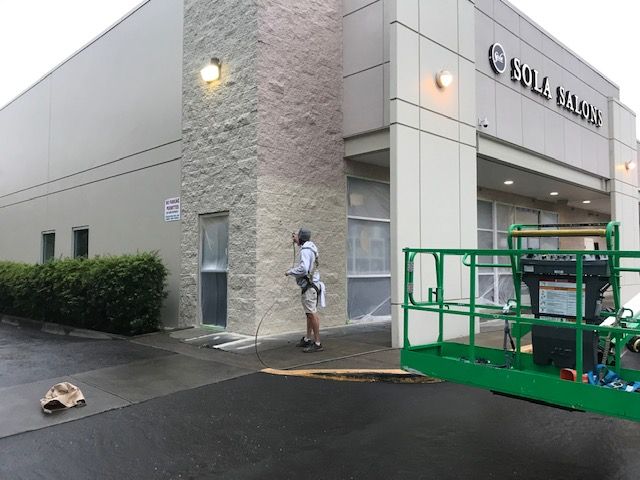
Every durable paint job starts clean. Professional crews remove chalk, mildew, salts, and loose paint so primers can bite into sound material. If your storefront sits near the river, washing also clears airborne grime from canopies and signs. Learn how this step supports adhesion by reviewing our approach to commercial power washing.
2) Dry‑Time And Moisture Checks
Surfaces must be dry enough for primer to bond. Shaded north walls and trim ends often hold moisture longer than sunny elevations. Crews test suspect areas and sequence work so coatings land on dry material. Do not paint over damp surfaces or you risk early peeling and blistering.
3) Repairs, Caulking, And Joint Sealing
Small gaps pull in water during wind‑driven rain. Pros replace soft wood, tighten fasteners on metal, and re‑caulk joints at trim ends, windows, and penetrations. The goal is a sealed envelope so paint functions as part of your weather defense, not just color.
4) Primers Matched To Each Substrate
Primer choice changes with the surface. Rust‑inhibiting primers lock down cleaned steel, bonding primers help weathered wood, and masonry primers even out porous block so topcoats build a uniform film. Getting this right boosts topcoat life and sheen.
5) Heavy‑Duty, Weather‑Resistant Topcoats
In our climate, flexibility and water‑shedding matter. Crews apply commercial‑grade finishes at the film thickness specified by the manufacturer. Uniform coverage, proper recoat windows, and patient cure times lead to longer intervals between repaints.
6) Smart Sequencing Around Wind And Showers
Teams often start on south or west elevations that dry first, then circle to the cooler sides. Near the Columbia, gusts can turn a dry morning into a spray hazard. Plan coating steps when wind and overspray risk are lowest to protect nearby cars, sidewalks, and landscaping.
Coatings That Stand Up To River Wind And Moisture
Different building materials need different systems. Here is how pros think about common commercial surfaces in Camas:
- Metal awnings and rails: cleaned to bare, spot‑primed with rust‑inhibiting primer, then finished with a durable topcoat that resists moisture and abrasion.
- Fiber‑cement and lap siding: stain‑blocking or bonding primer on weathered spots, flexible acrylic topcoat to handle expansion and shedding water.
- Masonry or tilt‑up: masonry primer to even porosity, then breathable finishes that release vapor while keeping rain out.
- Exposed wood trim and fascia: tight caulk at joints and ends, bonding primer on bare wood, and a satin or semi‑gloss finish for easier cleaning.
The right system resists rainfall streaks, holds color on gray days, and shields high‑touch areas like entries and handrails. Allow full cure time before heavy use so the film reaches design hardness.
Scheduling Without Disrupting Daily Operations
Painting a business should feel organized, not chaotic. A clear plan keeps customers moving and staff productive while the exterior gets renewed. Here is a simple timeline most local owners can use to plan ahead. Your exact schedule varies by building size, material, and season.
- 2–3 weeks before: request an assessment, confirm substrate repairs, and lock in color approvals.
- 1 week before: signage plan, traffic cones, and entry routing are set; deliveries and vendor access are coordinated.
- Day 1–2: wash, spot repairs, and drying time based on shade and wind.
- Day 3–5: priming and first coats by elevation; higher‑traffic entries are timed for slower periods.
- Day 6–7: finish coats, detailed trim, and punch‑list touch‑ups.
Seasonal windows: late spring through early fall often offers longer dry stretches in Camas. Many commercial exteriors schedule coating between late May and early October, then book touch‑ups or small projects during winter breaks. Plan projects around high‑traffic hours to keep doors open and customer flow steady.
To see a rain‑aware plan in action, scan this rainy‑season exterior painting checklist and compare it to your site conditions.
How We Minimize Impact On Customers And Staff
Communication is everything. Crews post daily updates, mark safe walk paths, and protect key areas with clean masking. Work zones shift as sections finish so entries reopen quickly. If noise or odors are a concern, teams can schedule early mornings, evenings, or weekends.
Phased work keeps the building presentable throughout. For example, an office near NE 3rd Avenue might complete front elevations mid‑week and finish alley or loading areas over a quiet Saturday.
Signs Your Building Is Ready For A Repaint
Not sure if it is time? Look for these signals when you circle the property:
Fading on south and west walls, hairline cracks at trim ends, chalky residue on your hand after a wipe, rust blooms on metal, and peeling near downspouts or planters. If you see any of these, it is smart to schedule an assessment before fall rains arrive again.
Maintenance That Protects Your Investment
A short plan each year extends the life of your coating system and slows down the effects of river wind and constant mist:
- Rinse splash zones and canopies in spring to remove winter grime and salts.
- Check caulk joints around doors, windows, and sign mounts; touch up as needed.
- Spot‑prime scrapes on railings or bollards to keep rust from spreading.
- Walk the site after wind events and remove debris that can hold moisture against walls.
Many commercial properties in Camas schedule full exterior repaints on a cycle that fits their substrates and exposure. The interval varies, but buildings that follow a simple rinse‑inspect‑touch‑up routine keep curb appeal longer and reduce bigger repairs later.
Local Context: Downtown, Waterfront, And Hillsides
Downtown storefronts see steady foot traffic and tight sidewalks, so safe routing and tidy staging matter as much as paint. Waterfront properties face gusts that shift midday, and hillsides like Prune Hill can hold morning dew longer. These little factors change the order of operations a pro crew will follow.
If you want a quick overview of services and recent projects, you can always start at our home base by exploring commercial exterior painting in Camas WA and related resources from Fletcher Painting Co., Inc..